
The RBA lifts rates to 4.85%: what November's rise means for you

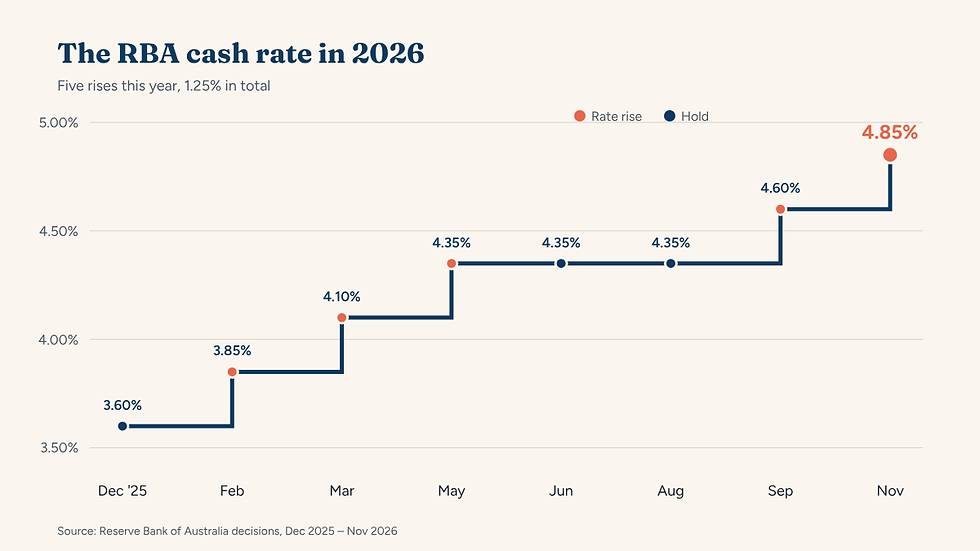
On Tuesday 3 November 2026 the Reserve Bank lifted the cash rate by 0.25% to 4.85%, the highest level since 2008. It's the fifth rise this year. Here's what changed, why the RBA did it, and what it means if you have a home loan or are planning to buy.
What happened
The RBA board voted to raise the cash rate from 4.60% to 4.85%. The vote was split six to three, with three members preferring to leave rates on hold.
That split matters. It tells us the board is divided on whether more rises are needed, which suggests rates are close to the top of this cycle.
This year the RBA has raised rates in February, March, May, September and now November, a total of 1.25% since the start of 2026.
Why the RBA raised rates again
In short, inflation went the wrong way.
Prices rose faster than expected. Inflation figures released in late October showed underlying inflation picking up again and coming in above the RBA's own forecast. A jump in petrol prices pushed the headline figure higher still.
The finish line has moved. The RBA now expects inflation to stay above 3% through the next year and not return to its target range until late 2027, about nine months later than it forecast in August.
Expectations are drifting. The RBA is worried that businesses and households are starting to treat higher inflation as normal. Once that happens, it's much harder to bring prices back under control.
Outside pressures. Fuel and commodity prices linked to the Middle East conflict and rising costs for technology goods are also adding to inflation.
The RBA raised rates while the economy is slowing. That tells you how seriously it's taking inflation.
The other side of the picture
The economy is already cooling. Growth is slowing, unemployment has risen by more than the RBA expected, and house prices have fallen significantly. Rate rises take 12 to 18 months to work through the economy fully, so much of this year's tightening is still to be felt.
That's why three board members wanted to wait, and why most economists think the RBA is at or near the end of its rate rises.
What it means for your repayments
Lenders decide how much of the rise to pass on and when. Most announce their changes within a few days, and the new repayment usually starts from your first repayment after the effective date. Your lender will write to you with the details.
As a guide, here's roughly how much more you'd pay each month on a 30-year principal and interest loan if the full rise is passed on, based on typical variable rates at the time of writing.
Loan balance | Extra per month from this rise | Extra per month from all five 2026 rises |
$400,000 | about $66 | about $320 |
$500,000 | about $82 | about $400 |
$600,000 | about $98 | about $480 |
$730,000 | about $120 | about $585 |
Estimates only. Your actual change depends on your rate, remaining term and lender.
What happens next
The RBA has kept the door open to further rises, saying it will do what it considers necessary to bring inflation back to target. The major banks' economists are split:
Some expect this to be the last rise, with cuts possible from the second half of 2027.
Others see a risk of one more rise, most likely in February.
The next big piece of the puzzle is the December quarter inflation figures, due in late January. If inflation keeps climbing, another rise is possible. If it starts to ease, the RBA is likely to hold.
What you can do now
If you have a loan: check your rate. In a rising market, the gap between what lenders offer new customers and what existing customers pay often grows. A rate review or refinance could offset some or all of this rise.
If you have a pre-approval: get it re-checked before making offers. Each rate rise reduces how much lenders will let you borrow.
If you're a first home buyer in Perth: higher rates have arrived alongside falling prices. For buyers with steady income and a savings buffer, that can mean less competition and more room to negotiate. The repayment is what decides whether a purchase is affordable, so start there.
If you're thinking about fixing: fixed rates already factor in some of this. If rates are near their peak, locking in for a long term could mean missing out if rates fall in 2027. A split between fixed and variable is one way to balance certainty and flexibility.
Not sure how this affects you?
I can review your current loan, re-check your borrowing power, or compare options across around 30 lenders, all in plain English.
Call Ian on 0439 365 365 or take the free Home Loan Readiness Check.
This article is general information only and doesn't take into account your objectives, financial situation or needs. Consider whether it's appropriate for you and seek advice before acting. Information is current as at 3 November 2026.
Credit Representative Number 439731 of Australian Credit Licence 384704.